
Main ocean-related causes of the Kere (famine) in the southern Madagascar: What solutions to strengthen community resilience?
MAHATANTE Tsimanaoraty Paubert,MARA Edouard Remanevy
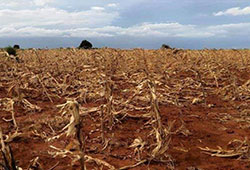 The "kere," or famine, in the southern Madagascar naturally attracted more attention from humanitarian organizations than from scientists,
primarily to save lives, despite the fact that it is a recurring phenomenon. Following the onset of the Tiomena (literally: red wind) or
sandstorm phenomenon in October 2020, and in accordance with recommendations from previous studies, a team conducted in-depth research using
an oceanographic and pragmatic approach. This study aims to confirm once more the link between the repetitive occurrences of kere and the
oceanographic phenomena in southern Madagascar, mainly upwelling (the rising of deep, cold water), the Indian Ocean Subtropical Dipole,
El Niño, La Niña, and the southeast trade winds, in order to better inform the public and policymakers. The research once again corroborated
the link between kere and these oceanographic phenomena. The 16 episodes recorded since 1896 appear to be strongly caused by upwelling but
exacerbated by the other aforementioned phenomena as well as certain ancestral practices. Recommendations aimed at strengthening community
resilience were put forward, including the development of the blue economy, improved access to water and road infrastructure, and the establishment
of the Great Green Wall.
The "kere," or famine, in the southern Madagascar naturally attracted more attention from humanitarian organizations than from scientists,
primarily to save lives, despite the fact that it is a recurring phenomenon. Following the onset of the Tiomena (literally: red wind) or
sandstorm phenomenon in October 2020, and in accordance with recommendations from previous studies, a team conducted in-depth research using
an oceanographic and pragmatic approach. This study aims to confirm once more the link between the repetitive occurrences of kere and the
oceanographic phenomena in southern Madagascar, mainly upwelling (the rising of deep, cold water), the Indian Ocean Subtropical Dipole,
El Niño, La Niña, and the southeast trade winds, in order to better inform the public and policymakers. The research once again corroborated
the link between kere and these oceanographic phenomena. The 16 episodes recorded since 1896 appear to be strongly caused by upwelling but
exacerbated by the other aforementioned phenomena as well as certain ancestral practices. Recommendations aimed at strengthening community
resilience were put forward, including the development of the blue economy, improved access to water and road infrastructure, and the establishment
of the Great Green Wall.
Key-words:
Kere, ocean, upwelling, subtropical indian ocean dipole, resilience, community, bleu economy
27/10/2025